
Flossing may not be the most enjoyable task, but its importance in maintaining oral health cannot be overstated. Neglecting to floss can lead to serious dental issues like cavities and gum disease. While it may seem inconvenient or uncomfortable, finding the right flossing method tailored to individual needs can make the process easier and more effective. Consistent flossing, even just a few times a week to start, can significantly contribute to a healthier mouth and a brighter smile in the long run.
If you hate flossing, you are not alone. In fact, many people say they would rather wash dishes or sit in traffic than to floss![4] Despite the dread most people feel for flossing, cleaning in between the teeth is one of the most important things you can do to keep your teeth for your entire life.
Why is flossing important?
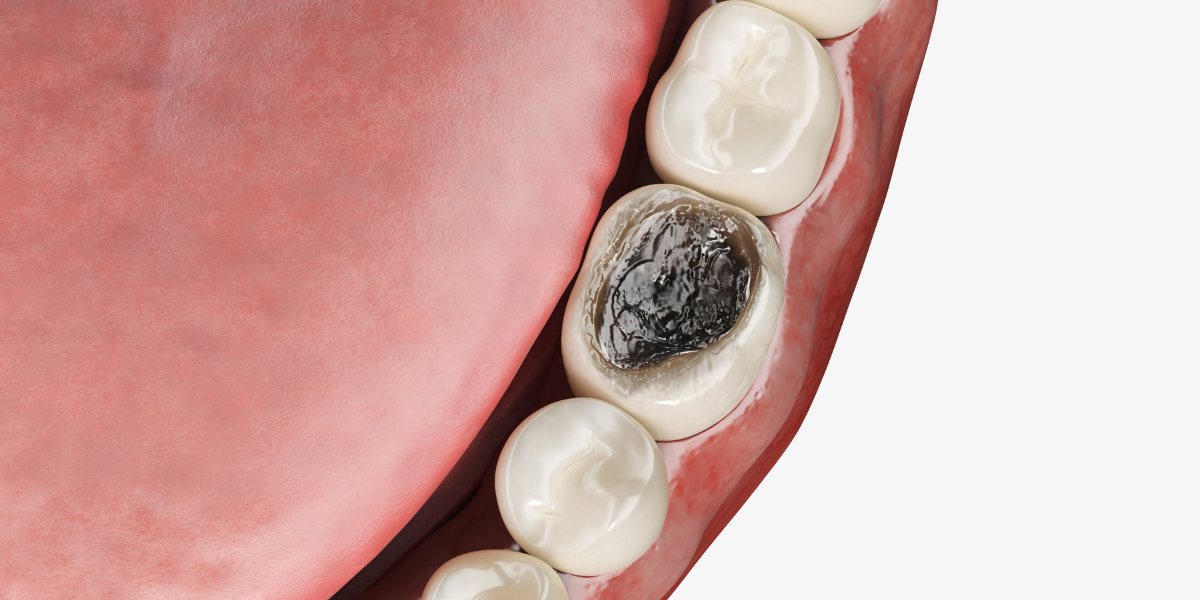
Brushing your teeth is critical to removing the harmful plaque that accumulates on the surfaces of the oral cavity. However, a toothbrush can only remove plaque if it can reach it. The areas in between the teeth are generally not large enough to allow access to toothbrush bristles[1]. If you’re not doing something to clean in between the teeth, the plaque that collects in these areas can cause dental diseases such as cavities, gingivitis, or periodontal (gum) disease[1]. Even though flossing is important, only about one third of people floss daily, while one third floss at least once per week, and one third never floss[3]! In comparison, 77% of people brush twice every day[2]. People may not floss because it is inconvenient or uncomfortable, while others do not see the value in doing it.
Is flossing for everyone?
Brush, floss, rinse, repeat. This routine has been engrained through messages from our dental care providers and dental product marketing. However, no two mouths are exactly alike, which means each individual’s oral care regimen should be individualized. People who have braces greatly benefit from the use of a water flosser. There are even special water flosser tips designed just for people with braces. Water flossers are also a great addition for people who have deep pockets around their teeth, and for those with dental implants. Interdental brushes can be helpful with people with wider spaces in between their teeth.
String floss comes in many varieties: waxed, unwaxed, taped, tufted… Most of the floss selection comes down to personal preference. Some types of floss are sturdier to avoid shredding between crowded teeth or on rough restorations. If you are able to effectively manipulate floss, string floss gives you the most control and effective adaptation to the teeth. However, if you have a hard time reaching your back teeth when flossing or if you struggle with dexterity challenges, floss holders or floss picks make flossing easier. While it is more difficult to get the floss to “hug” the tooth with these types of aids, they are still useful.
But what if my gums bleed when I floss?
Bleeding when flossing is a sign of disease. Bleeding is present in gingivitis as well as in most cases of active periodontal disease. Both types of disease are caused by an infection of the gums caused by bad bacteria. Your dentist or dental hygienist can tell you if you have one of these conditions. You may need special dental care in which the buildup is removed from the teeth above and below the gumline.
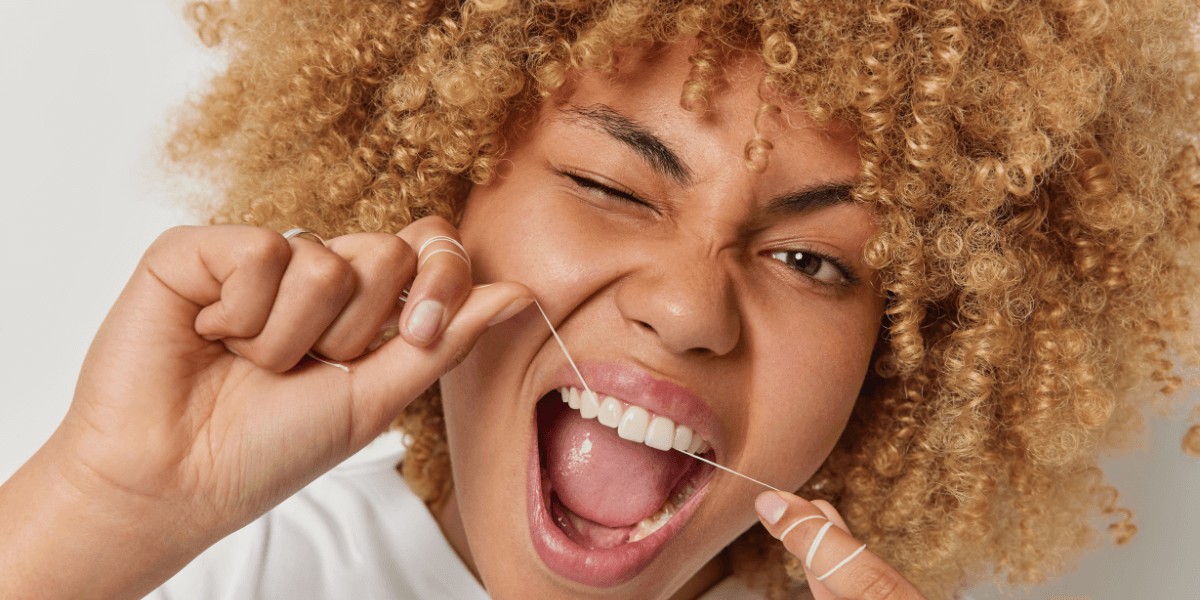
If your gums bleed when you floss, it is a sign that you should floss more frequently, not less frequently! Removing the bad bacteria from in between the teeth will help your body to heal, and will actually lead to a decrease in bleeding over the span of a couple of weeks. Just make sure you are hugging the floss in a soft “C” shape around the tooth and using an up-and-down motion. Do not saw the floss back and forth, as this will cut the gums.
Whichever method of flossing you choose to use, start by setting realistic goals. If you have never flossed before, consider starting by flossing two or three times weekly, and gradually increasing to daily flossing. Making flossing part of your hygiene routine will help to keep your mouth looking and smelling great!
Learn more about Rachel Stroble, and check out her other article A Few Minutes Can Save a Life.
Register as an RDH Connect member to gain the connections, experience, & exposure to grow your career.
- American Dental Association. (2021, September 21). Floss/interdental cleaners. https://www.ada.org/resources/research/science-and-research-institute/oral-health-topics/floss
- Busch, M. (2020, October 21). How did patients’ dental habits change during COVID-19? Delta Dental Institute. https://www.deltadentalinstitute.com/news/delta-dental-news/how-did-patients-dental-habits-change-during-covid-19/
- Fleming, E. B., Nguyen, D., Afful, J., Carroll, M. D., & Woods, P. D. (2018). Prevalence of daily flossing among adults by selected risk factors for periodontal disease-United States, 2011-2014. Journal of Periodontology, 89(8), 933–939. https://doi.org/10.1002/JPER.17-0572
- Rack, J., (2015, June 24). Are you flossing or just lying about it? The dentist knows. NPR. https://www.npr.org/sections/health-shots/2015/06/24/417184367/are-you-flossing-or-just-lying-about-flossing-the-dentist-knows
RELATED ARTICLES